
Blog
Effective B2B Lead Generation Strategies That Create Real Sales Opportunities
12 Oct 2026Techwaresoft5 min read
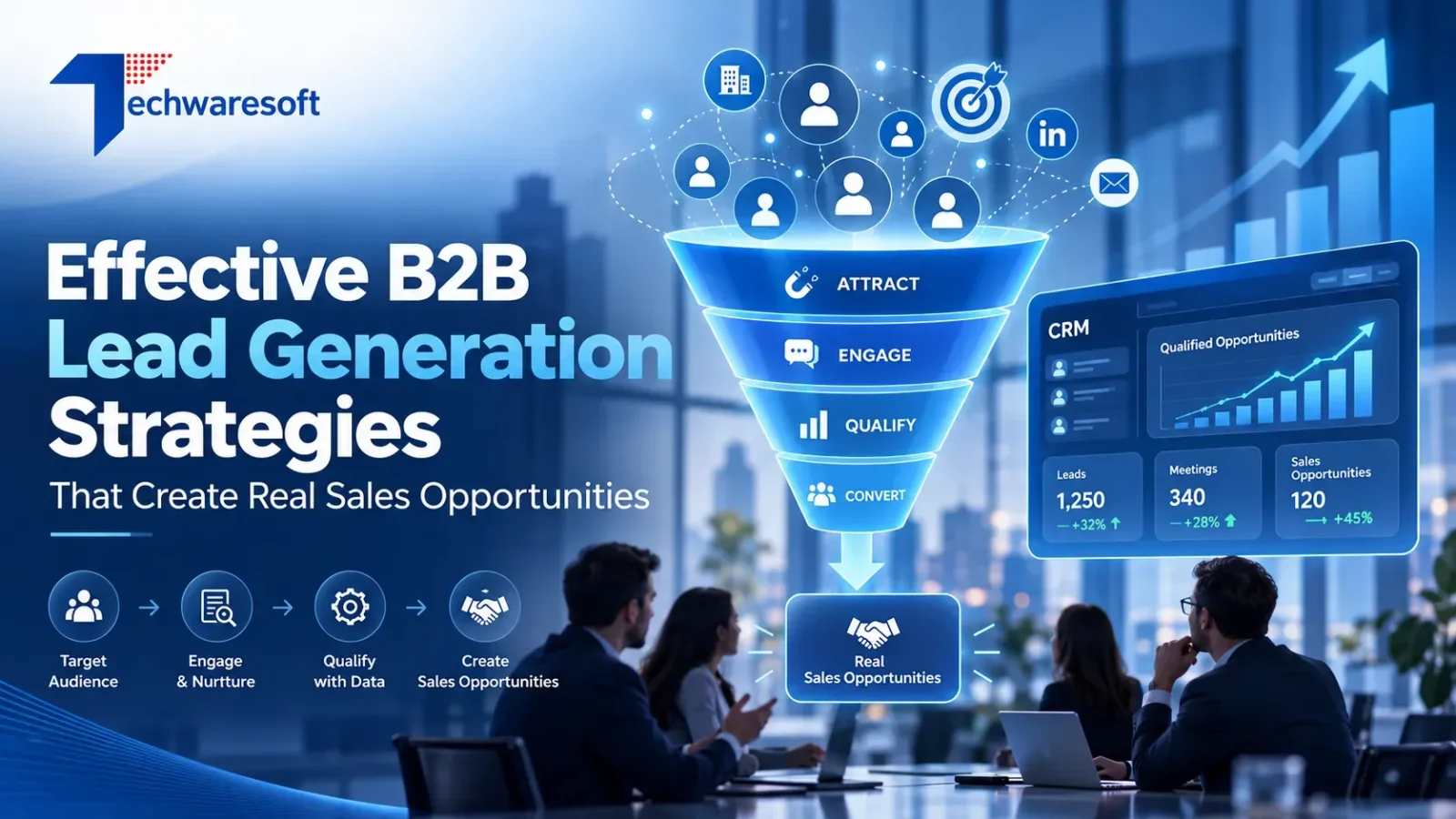
B2B lead generation can look successful long before it actually becomes successful.
A campaign brings in traffic. Forms start arriving. Cost per lead drops. On paper, everything appears to be moving in the right direction. Then the sales team reviews the enquiries and finds that many of them are too small, outside the target market, looking for something different, or simply not ready to buy.
That gap between generating leads and generating useful sales opportunities is where most B2B strategies need work.
Effective B2B lead generation strategies should help a business reach companies that are a good fit, answer the questions those buyers are already asking, and give sales enough information to continue the conversation.
Effective B2B Lead Generation Strategies Begin With Better Targeting
Before deciding whether to invest in SEO, paid search, LinkedIn, or outbound campaigns, get clear about who you want to reach.
“Businesses in the UAE” is not a target audience.
A useful customer profile is more specific. A software company, for example, might perform best with mid-sized businesses that have multiple departments, rely heavily on spreadsheets, and are beginning to struggle with disconnected systems.
That immediately gives marketing more direction.
Look at factors such as:
- Industry and company size
- Location
- Current systems or processes
- Typical business problems
- People involved in the buying decision
- Reasons a company starts looking for a solution
It is equally useful to know who is not a good fit. That can save both advertising budget and sales time.
Create Content for Questions Buyers Actually Ask
B2B buyers rarely wake up and decide to contact the first company they find.
They research the problem first.
Someone considering a CRM may search for integration limitations. A company evaluating ERP software may want to understand migration, implementation time, or the difference between two platforms. A decision-maker looking for a development partner may want proof that the provider has handled similar work before.
Your content should reflect those conversations.
That can include comparisons, implementation guides, pricing considerations, integration advice, case examples, and articles around problems buyers encounter before making a decision.
A well-planned digital marketing services strategy should connect this content with SEO, landing pages, and conversion activity. Publishing more articles is not the goal. Helping the right buyer understand what to do next is.
Use PPC When There Is Already Buying Intent
Paid search becomes particularly useful when a prospect already knows what they need.
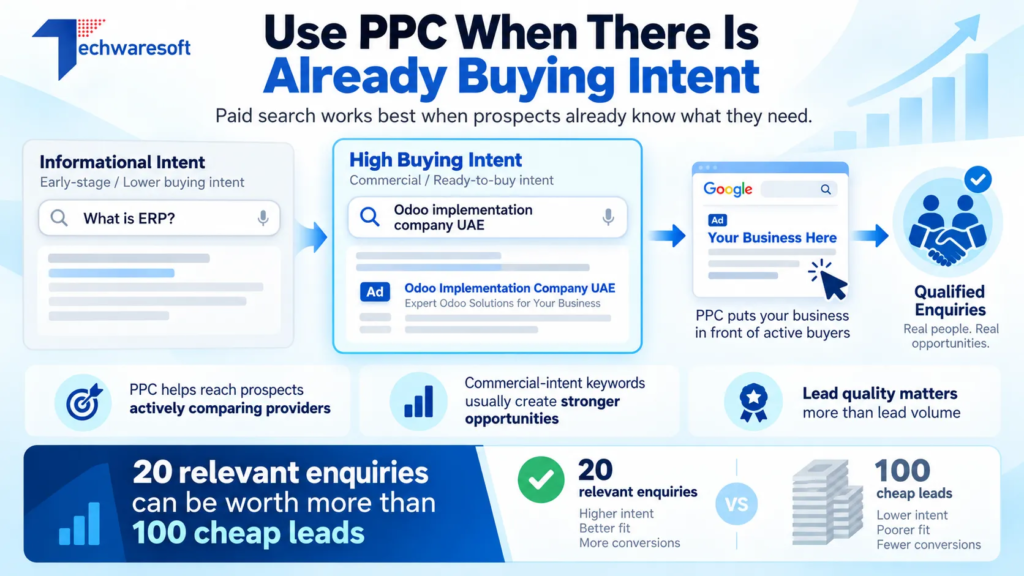
There is a meaningful difference between someone reading “What is ERP?” and someone searching “Odoo implementation company UAE.”
The second search shows much stronger commercial intent.
This is where PPC services can support B2B lead generation. Search campaigns can place a business in front of prospects who are actively comparing providers or looking for a specific service.
The mistake is judging performance only by lead volume.
Twenty relevant enquiries can be worth far more than 100 cheap leads that never move beyond the first sales call.
Which B2B Lead Generation Channels Work Best?
There is no single channel that works best for every business.
| Channel | Where It Works Well | Main Limitation |
| SEO | Building long-term visibility around buyer searches | Results usually take time |
| PPC | Reaching prospects with immediate search intent | Requires ongoing spend and optimization |
| Targeting specific job roles and companies | Costs can become high | |
| Outbound | Approaching selected accounts directly | Poor personalization quickly hurts results |
| Referrals | Generating warm, trust-based opportunities | Harder to scale consistently |
For many B2B companies, the strongest approach is a combination. SEO builds visibility, PPC captures existing demand, and outbound can reach companies that may not be searching yet.
Make the Landing Page Match the Reason Someone Clicked
A common mistake is sending every visitor to the homepage.
If a user searches specifically for ERP implementation, they should arrive somewhere that talks about ERP implementation.
For example, someone exploring Odoo services is likely to care about implementation, customization, integrations, migration, and ongoing support. A page filled with broad statements about “digital transformation” leaves too much work for the visitor.
Good landing pages answer the obvious questions quickly:
What do you provide? Who is it for? What happens during the project? Why should the buyer trust you? What should they do next?
That clarity also improves lead quality because people understand the offer before submitting an enquiry.
Do Not Let Good Leads Disappear After the Form
Marketing can generate a strong lead and still lose it through poor follow-up.
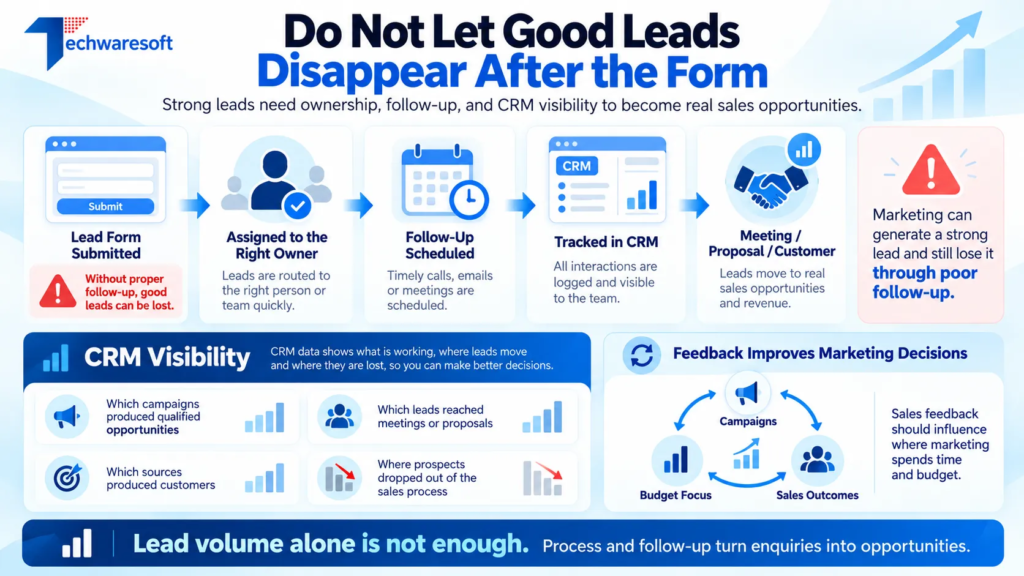
Every serious enquiry should enter a defined process. Someone needs to own it, understand what the prospect asked for, and know when to follow up.
CRM data becomes especially useful here because it connects marketing activity with actual sales outcomes.
Instead of stopping at “50 leads generated,” businesses can see:
- Which campaigns produced qualified opportunities
- Which leads reached meetings or proposals
- Which sources produced customers
- Where prospects dropped out of the sales process
That feedback should eventually influence where marketing spends its time and budget.
Measure What Matters to Sales
Cost per lead has its place, but it should not become the main definition of success.
A better picture comes from looking further down the funnel:
- Qualified leads
- Meetings booked
- Sales opportunities
- Proposals
- Customers acquired
- Revenue by channel
If one campaign generates fewer leads but consistently creates better opportunities, it may be the stronger campaign.
That sounds obvious, yet plenty of B2B reporting still ends at clicks and forms.
A Better B2B Pipeline Starts With Better Decisions
More leads will not fix a weak lead generation process.
The businesses that build stronger pipelines usually get a few fundamentals right: they know who they are targeting, understand what those buyers care about, make their offer easy to understand, and keep marketing connected to what happens in sales.
Once those pieces are in place, lead generation becomes less about chasing numbers and more about creating conversations that have a realistic chance of turning into business.
Frequently Asked Questions About B2B Lead Generation
What are the most effective B2B lead generation strategies?
For most businesses, the strongest approach combines clear targeting, useful content, SEO, paid search, CRM-based qualification, and consistent sales follow-up.
How can a business generate better-quality B2B leads?
Start by narrowing the target audience. Build campaigns around specific business problems and use sales feedback to understand which channels are producing genuine opportunities.
Is SEO or PPC better for B2B lead generation?
They solve different problems. SEO supports long-term visibility, while PPC is useful for capturing existing demand. Many businesses benefit from using both.
Why do B2B leads often fail to convert?
Poor targeting, weak landing pages, unclear offers, slow follow-up, and a mismatch between marketing and sales qualification are common reasons.
What should businesses measure besides lead volume?
Qualified leads, meetings, opportunities, proposal rates, customer acquisition cost, conversion rates, and revenue by source provide a clearer picture of performance.

Working on something like this?
Tell us what you are building and who it is for. We will tell you what it takes.