
Custom web development for UAE businesses
Web applications, portals and websites built around what your business actually does — fast on a phone, connected to the systems you already run, and handed over so your team can operate them.
Front end, back end, APIs, CMS and integrations, from a software company in Sharjah that designs, builds, hosts and supports what it delivers.

Capabilities and services
What custom web development covers
Custom web development is software that runs in a browser and is built for one business rather than bought off the shelf: the customer portal, the booking system, the internal tool, the platform your product runs on — and the website in front of them.
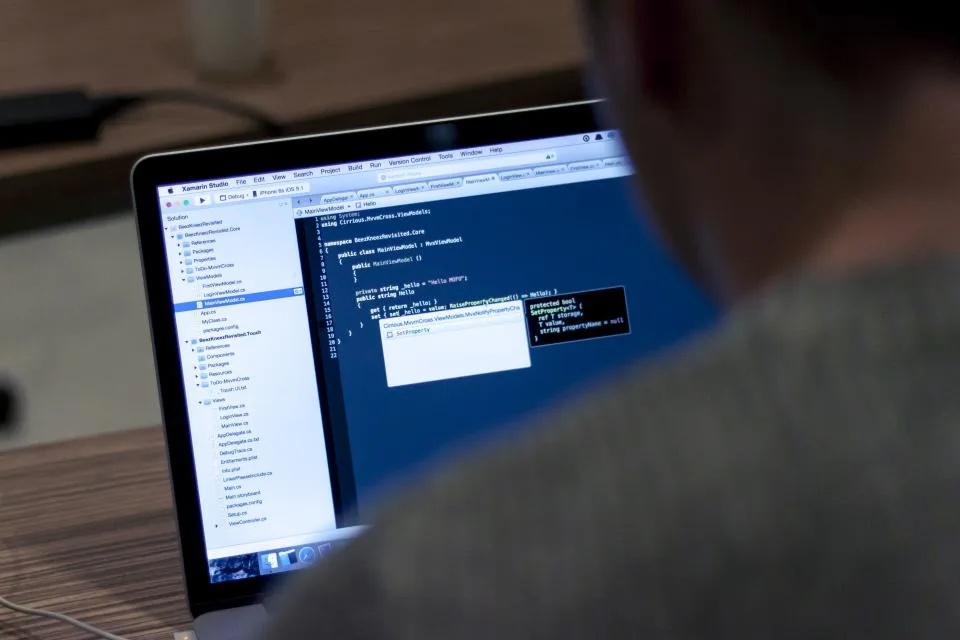
- Websites and web applications A website mostly publishes; a web application does work — takes bookings, raises quotes, tracks orders, runs a workflow. Most businesses need some of each, and the line between them is where most of the scoping happens.
- Front end and back end The front end is what people see and use, on every screen size. The back end holds the data, the rules and the security. Both are built together, by people who talk to each other.
- Built or bought Off-the-shelf software is cheaper when it fits. Custom is worth it where your process is the advantage, where three tools are being stitched together by hand, or where the product itself is the web application.
- What lasts after launch Performance, security, accessibility and search visibility are designed in rather than patched on, and the site can be updated by your own team without a developer for every change.
Business challenges we solve
Six reasons businesses come to us for web development — usually because what they have now has stopped keeping up.
Work done in spreadsheets and email
Bookings, approvals and orders run through inboxes and shared files, because no system was ever built to hold them.
A site that only works on a desktop
Most visitors arrive on a phone, and the forms, tables and checkout were never designed for one.
Slow pages and lost visitors
Heavy pages, unoptimized images and a busy server mean people leave before the page has finished loading.
Systems that do not share data
The website, CRM, ERP and payment provider each hold part of the customer, and staff copy between them by hand.
Every change needs a developer
Updating a page, a price or a banner means raising a ticket, because there is no CMS the team can use.
Customers who want to self-serve
Clients and partners phone or email for information a portal could show them: order status, documents, invoices, bookings.
Our web development services
Five services covering what a business builds for the web — from the public website to the platform behind it.
Custom web applications
Software in the browser built around one process: bookings, quotes, orders, approvals or your whole product.
Requirements, data model, user roles, workflows, reporting, and the admin screens your team uses every day.
Customer and partner portals
Secure areas where clients, suppliers or agents log in and serve themselves.
Accounts and permissions, document access, order and case status, invoices and payments, built on your existing data.
Websites and CMS builds
Responsive, fast websites your team can update without asking a developer.
Page templates, a content management system, SEO foundations, redirects from the old site, and editor training.
APIs and integrations
Your web platform connected to the CRM, ERP, payment providers and messaging around it.
REST APIs, webhooks, third-party API integrations and data sync, so records are entered once and used everywhere.
Hosting, maintenance and support
The site or application kept fast, secure and up to date after launch.
Managed hosting or handover to your team, monitoring, backups, security updates, and new features as you need them.
What goes into a web build
Twelve capabilities across four layers of a web project. Which ones carry the weight depends on whether you are building a website, a portal or a product.
Front end
What people see and use, on every screen.
Responsive interfaces
Layouts, forms and tables designed for phones first and scaled up to desktop.
Modern JavaScript frameworks
React and Next.js for interactive applications and fast, search-friendly sites.
Accessibility
Keyboard use, contrast, screen readers and clear forms, checked against WCAG guidance.
Back end
The data, the rules and the security behind the screens.
Application logic
Workflows, calculations, approvals and notifications, written for your process.
Databases
Data models on PostgreSQL or MySQL, designed for the reports you will need later.
Authentication and roles
Sign-in, single sign-on where needed, and permissions by role and record.
Content and search
Getting found, and keeping the content current.
Content management
A CMS shaped to your content, so editors change pages without touching layout.
Technical SEO
Clean URLs, metadata, structured data, sitemaps and redirects from the old site.
Performance
Image optimization, caching and a CDN, with page speed measured before launch.
Integration and operations
How the platform connects, ships and stays up.
APIs and webhooks
Connections to CRM, ERP, payment, email and messaging services.
Cloud hosting and deployment
Automated deployments to AWS, Azure or managed hosting, with staging first.
Monitoring and security
Uptime and error alerts, backups, HTTPS, and dependencies kept patched.
Web platforms built for how the UAE uses them
A web application works the same way everywhere. These six are what change when its users, data and payments are in the UAE — and they are far cheaper to design in than to retrofit.
Arabic and right-to-left
Arabic and English versions with layouts that genuinely mirror for right-to-left, Arabic typography that reads well, and content managed in both languages.
Hosting in the UAE
Where data has to stay in the country, we deploy to in-country cloud regions — AWS Middle East (UAE) or Microsoft Azure UAE North in Dubai — rather than a default region overseas.
Built with the PDPL in mind
Consent, data minimization, access controls and retention designed around the UAE's federal data protection law, or the DIFC and ADGM rules if you operate in those free zones.
AED payments and VAT
Online payments through UAE payment gateways that settle in AED, with VAT shown and invoiced correctly at checkout and in the customer portal.
WhatsApp as a channel
Click-to-chat, order and booking notifications over WhatsApp, and enquiries that land in your CRM rather than on one person's phone.
Gulf time and local dates
Bookings and deadlines in Gulf Standard Time, the Saturday–Sunday weekend, and public holidays that follow the Hijri calendar and move each year.
Web development process
Six stages, in this order. The first two are where most of the cost is saved: a change on a whiteboard is cheap, the same change after launch is not.
-
Discovery
What the site or application has to do, who uses it, what it connects to and what success looks like — agreed before anyone opens a design tool.
-
Design and prototype
Information architecture, interface design and a clickable prototype, so structure and flow are agreed while changes are still cheap.
-
Architecture
Stack, data model, integrations and hosting chosen against the requirements, with security and performance planned rather than added later.
-
Build in increments
Development in short iterations you can review on a staging site, with responsive behavior and performance treated as requirements throughout.
-
Test and launch
Testing across devices and browsers, content loaded, redirects mapped from the old site, analytics in place, then a planned go-live.
-
Support and improvement
Monitoring, updates and new features after launch, based on how people actually use what was built.
Why choose Techwaresoft for web development?
Seven things that come from building software for a living, rather than only designing websites.
One team from design to hosting
Discovery, design, front end, back end, integrations, testing and hosting sit in one company, so nothing gets lost in a hand-off between agencies and nobody can blame the other supplier.
Built around your process
We start with how your business works, then decide what to build.
Connected to what you run
We also implement the CRMs and ERPs your platform has to talk to.
Phone-first by default
Every screen is designed and tested on a phone before a desktop.
UAE requirements understood
Arabic, in-country hosting, AED payments and local data rules from a Sharjah team.
Yours to run
Handover and training so your team can edit content without us.
Support after launch
The team that built it monitors, patches and extends it.
Trusted by







A site, a brand and hosting from a standing start
Our published case closest to a web build: a Dubai catering company with no digital presence, given an Odoo website with a menu the team edits itself, a brand identity and hosting behind a WAF and CDN. It was built on Odoo rather than written from scratch, and a custom web application case study will take its place once a client has approved one.

From ground zero to gourmet — a digital launch for a luxury catering brand
- Challenge
- A Dubai catering company with a premium offline reputation and nothing digital — no website, no identity, no sales assets — on a launch deadline.
- Solution
- An Odoo site with a menu the team edits itself, a full brand identity and shoot, social launch on Instagram, Facebook and TikTok, and hosting behind a WAF and CDN.
- Result
- Within 90 days — a surge in organic and social traffic, and high-value enquiries from event planners and private clients.
- Odoo
- Managed hosting
- Brand & social
Industries we serve
Every sector needs a website. The ones below are where a web application, a portal or an integration does the heavier lifting.

Retail & Ecommerce
Storefronts, order tracking and back-office tools connected to stock, payments and delivery.
Talk to us
Real Estate
Property listings, enquiry capture, viewing bookings and tenant or owner portals.
Talk to us
Healthcare
Appointment booking, patient forms and portals with access controlled by role.
Talk to us
Education
Admissions, course catalogues, learning platforms and parent portals.
Talk to us
Logistics
Shipment tracking, customer portals and dispatch tools fed from your operations system.
Talk to us
Professional Services
Client portals for documents, requests and invoices, and websites that bring in qualified enquiries.
Talk to us
Technology & SaaS
The web application that is the product, plus the marketing site and admin tools around it.
Talk to usWhat clients say about working with us
Clients on how the delivery went. The first two are about software we built — custom software for Kurve and a learning platform for iDrum; the third is about developers placed in a client's team.
They built software that truly matched our needs. The team was responsive, detail oriented, and reliable, delivering solutions on time and ensuring the quality exceeded what we had hoped for.
Techwaresoft built a learning platform that is intuitive and engaging. The design makes learning drums enjoyable and straightforward, and their attention to user experience really stands out. Our students love the platform.
Techwaresoft's staff augmentation transformed our team. Their skilled professionals integrated seamlessly into our projects, bringing reliability, expertise, and efficiency. The team's proactive approach ensured our deadlines were met while elevating overall project quality.
Frequently asked questions
What businesses ask before starting a website or web application. If yours is not here, it is quicker to ask.
Do we need a website or a web application?
If it mainly publishes information, a website. If people log in, submit things, pay or track something, you need a web application — or a website with one behind it. Discovery settles which, and it is often both.
Which technology do you build with?
Whatever fits the project and your team. We work with modern JavaScript frameworks such as React and Next.js, Ruby on Rails, and platforms like Odoo and Shopify, and we explain the choice rather than defaulting to one stack.
How long does a web project take?
It depends on scope, how much content is ready and how quickly feedback comes back. We scope in phases and give you a realistic schedule after discovery, not a number before we understand the work.
Will we be able to update the site ourselves?
Yes, where that is what you want. We set up a CMS that suits your team's workflow and hand over with the training needed to run it without us.
Can it connect to our CRM, ERP or payment provider?
Usually, yes. Most business systems have APIs or webhooks, and integrations are scoped at the start rather than discovered at the end. Where a system has no API, we tell you what the alternatives are.
Can you build in Arabic as well as English?
Yes. Bilingual builds with proper right-to-left layouts, Arabic typography and content managed in both languages are part of how we work in the UAE.
What happens to our existing URLs if we rebuild?
They get mapped. Redirects from old URLs to their new equivalents are part of the launch plan, so existing links and search visibility are not lost in the move.
Do you handle hosting and maintenance?
We can. Some clients prefer we manage hosting, deployments and updates; others take it in-house at handover. Both work, and we set the project up for whichever you choose.
Build the web platform your business runs on
Tell us what your customers and team need to do online, and what is getting in the way today. We will tell you what to build, what to connect and what it takes to get there.
A first call is about the work rather than the technology: who uses it, what they need to get done, and which systems it has to talk to.