Blog
The Evolution of Governed Agentic AI in the Software Development Life Cycle: An AIDLC Scientific Research Collaboration Between Vaasa University of Applied Sciences and Techwaresoft
23 Jun 2026Techwaresoft8 min read
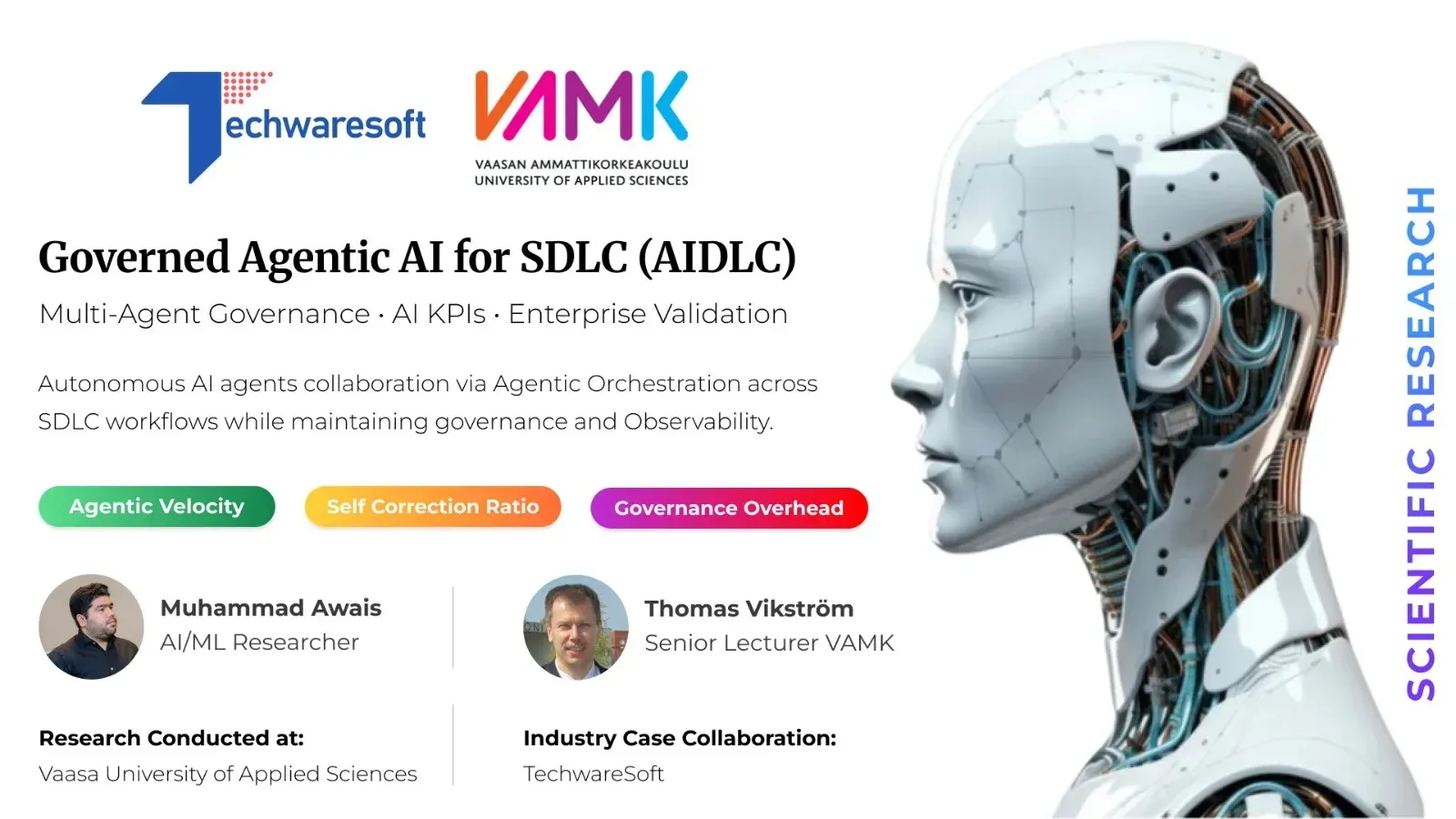
By: Muhammad Awais and Thomas Vikström, Master of Engineering at VAMK
(Vaasa University of Applied Sciences)
Keywords:
Project Management, Artificial Intelligence, Automated SDLC,
Agentic AI, Multi-Agent Systems, Multi-Agent AI, Human in the Loop (HITL), AI
Governance, Software Development Life Cycle (SDLC), Human-Centered AI
(HUMAIN)
Introduction: From Reactive to Agentic Systems
The software engineering industry is undergoing a profound paradigm shift as AI
moves from being a reactive set of technologies to becoming autonomous
agents. The “critical gap” created by this change makes it necessary for
organizations to “move beyond traditional frameworks,” as agile methodologies
still represent “human-centric paradigms” where coordination requires the
human capability of the development team (Parikh, 2026, p. 10; Akbar et al.,
2025, p. 2). It becomes imperative for organizations to embrace an architecture
based on decision-making to create “responsible autonomy,” which will allow the
AI agent to think autonomously while the professional takes strategic decisions
(Gill, 2025, p. 9; Shavit et al., 2023, p. 2).
Classic AI methods used in software engineering include bug prediction and
automated unit testing, which were often reactive to pre-set queries or static
contexts within the domain of rule-based automation (Akbar et al., 2025, p. 2;
Mustafa, 2025, p. 2). Conversely, Agentic AI refers to the emergence of a novel
approach where agents are able to act autonomously, learn adaptively, and
perform goal-oriented thinking (Akbar et al., 2025, p. 1). These agents operate
as “compound agentic systems,” which consist of multiple subsystems like
memories and reflective loops to address difficult tasks through planning and
iterative analysis (Hu et al., 2024, pp. 1, 4). Contrary to monolithic model
queries, the agents are proactive and able to propose the initiation of tasks,
make recommendations for architectural changes, and collaborate on distributed
development efforts throughout the SDLC (Akbar et al., 2025, p. 1).
Bridging the SDLC Gap through Governed Decision Science
The existing approaches to managing projects, especially Agile, is a
human-centric approach whose decision-making and creativity capabilities
depend on the human developers (Akbar et al., 2025, p. 2). However, in
implementing autonomous agents within these processes, there is need for
decision science to enable a human-centric and decision-driven approach to an
agile software development life cycle (SDLC) (Gill, 2025, p. 2). It is facilitated by
the use of the structured decision-making architecture involving elements such
as “decision catalogs,” which are vital because they involve a complete list of
decisions and the elements of those decisions amenable to automation (Gill,
2025, pp. 8–9).
However, currently, most research has been focused mainly on single case
studies or prototypes without considering the influence of agentic autonomy of
AI assistants throughout the entire software development process. Also, due to
its high reliance on subjective data, there are no systematic empirical studies of
the outcomes of delivering AI (Akbar et al., 2025, pp. 1-2; Ståhlberg, 2024, p.
2).
An attempt to address the knowledge gap would be the proposed study where
the creation of an agentic ai platform for the collection of data that will be used
in monitoring the scientific parameters related to governance is envisaged,
whereby the main aim is the creation of measuring parameters like code
integrity, delivery speed, and governance costs from system log data.
Research Method: Redefining Velocity and Quality
Recent experimentation of this study using an agentic prototype proves the
extreme effect that the use of agentic systems brings to SDLC efficiency. For
instance, human-driven creation and estimation take 15 minutes per story in
requirements engineering, while instant generation is possible via agentic tools,
resulting in an estimated speed boost of about 900 times during the
requirements stage. Implementation-wise, while it takes 2.5 hours for a human
to complete a task worth 1 point, a pipeline involving agents requires just 7.1
minutes to generate the code, being roughly 21 and 10 times faster than
humans and AI-augmented humans, respectively.
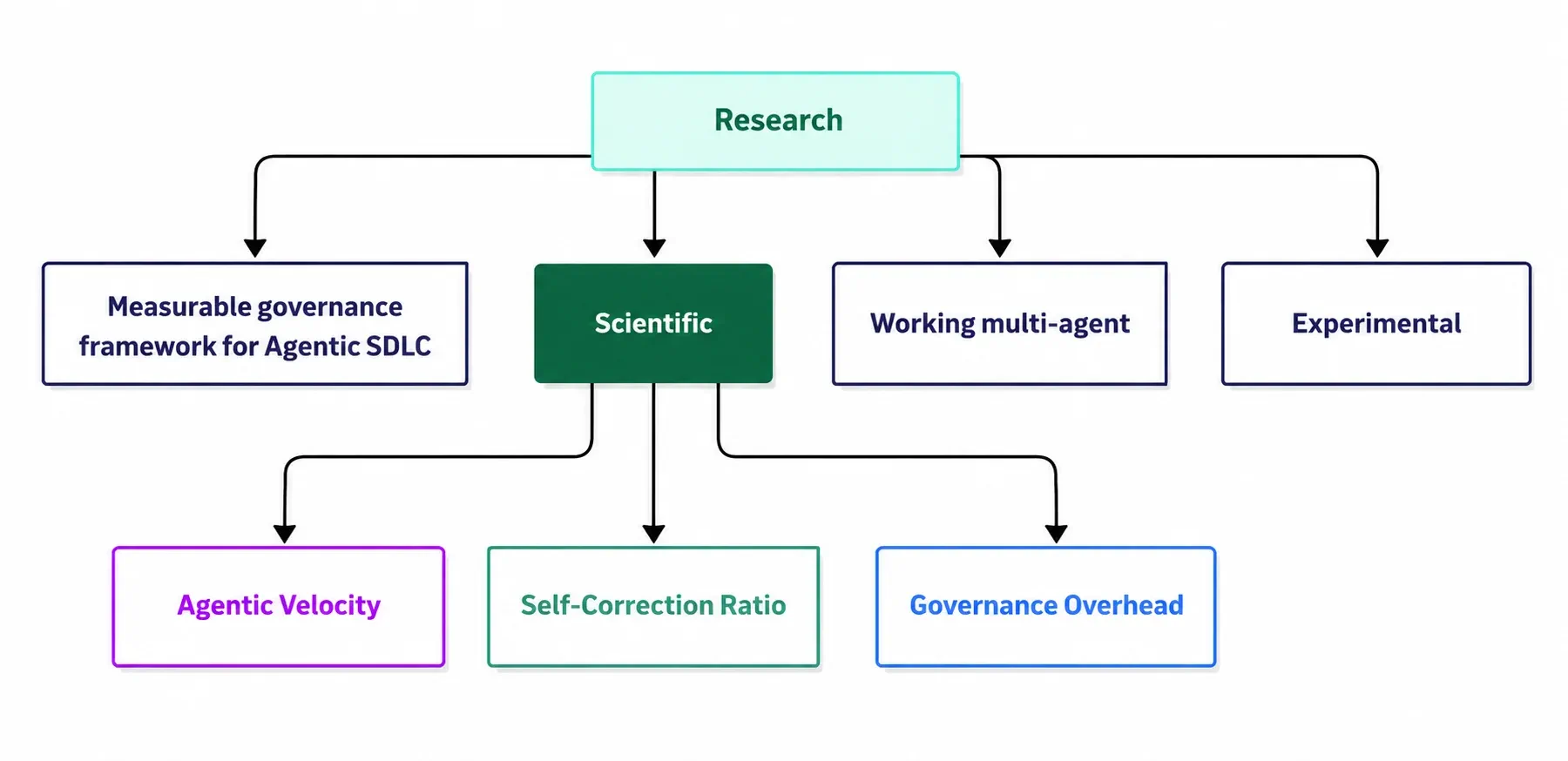
Figure 1. Research Method (Scientific Tooling)
Finally, the quality of results produced by such governed AI systems increases
because of the ability of an agent to fix their mistakes. Recent research found
that an autonomous QA agent could have a self-correction ratio of 0.25, thus
correcting 25 percent of initial failures automatically. This property allows for
multi-stage verification and enables teams to get to zero defect escape after
governance.
Some of the performance indicators that emerged from this evolution are as
follows:
1. Agentic Velocity (AV): An agentic tool is 21x faster in code development
compared to humans and about 10x faster than an assisted human.
2. Self-correction Ratio (SCR): Autonomic QA agents fix about 25% of
failed tests in the perception-decision-action cycle.
3. Governance Overhead (GO): Human reviews take an average of 4+
days whereas, agentic review pick-up times are measured in seconds per
story
The Evolving Role of the Project Manager
With agentic systems taking charge of recurring technical processes and “opaque
decision chains,” the function of the Product and Project Manager needs to
evolve accordingly (Parikh, 2026, p. 32; Akbar et al., 2025, p. 7). The
modern-day PM is moving away from being a procedural gatekeeper to an
orchestrator of socio-technical environments (Parikh, 2026, p. 1). As part of such
a transition, the manager functions as a designer of behavioral guardrails,
setting limits and ethical principles in the context of which the AI agent performs
(Parikh, 2026, pp. 31, 81). This necessitates a strong focus on legibility and
explainability, with all AI elements generating a “rationale trace” of their actions
(Pysmennyi et al., 2025, p. 53; Shavit et al., 2023, p. 11).
Results of the Study
The comparison as demonstrated in below Table 1 reveals the balance between
the governance’s strength and speed.
OFF Governance was the fastest executing model without any governance
overhead; however, it was the least stable for QA, with 66.67% QA pass rate,
one complete story, and a self-correction ratio of 0.3333.
BASIC Governance offered the best-balanced approach with five complete
stories, Agentic Velocity of 46.91 features per hour, improved QA stability
(83.33%), and reasonable governance overhead of 115.17 seconds.
STRICT Governance demonstrated the highest assurance level with six complete
stories and 100% governance pass rate, although it had higher governance
overhead (136.6 seconds) and slower execution speed (24.71 features/hour).
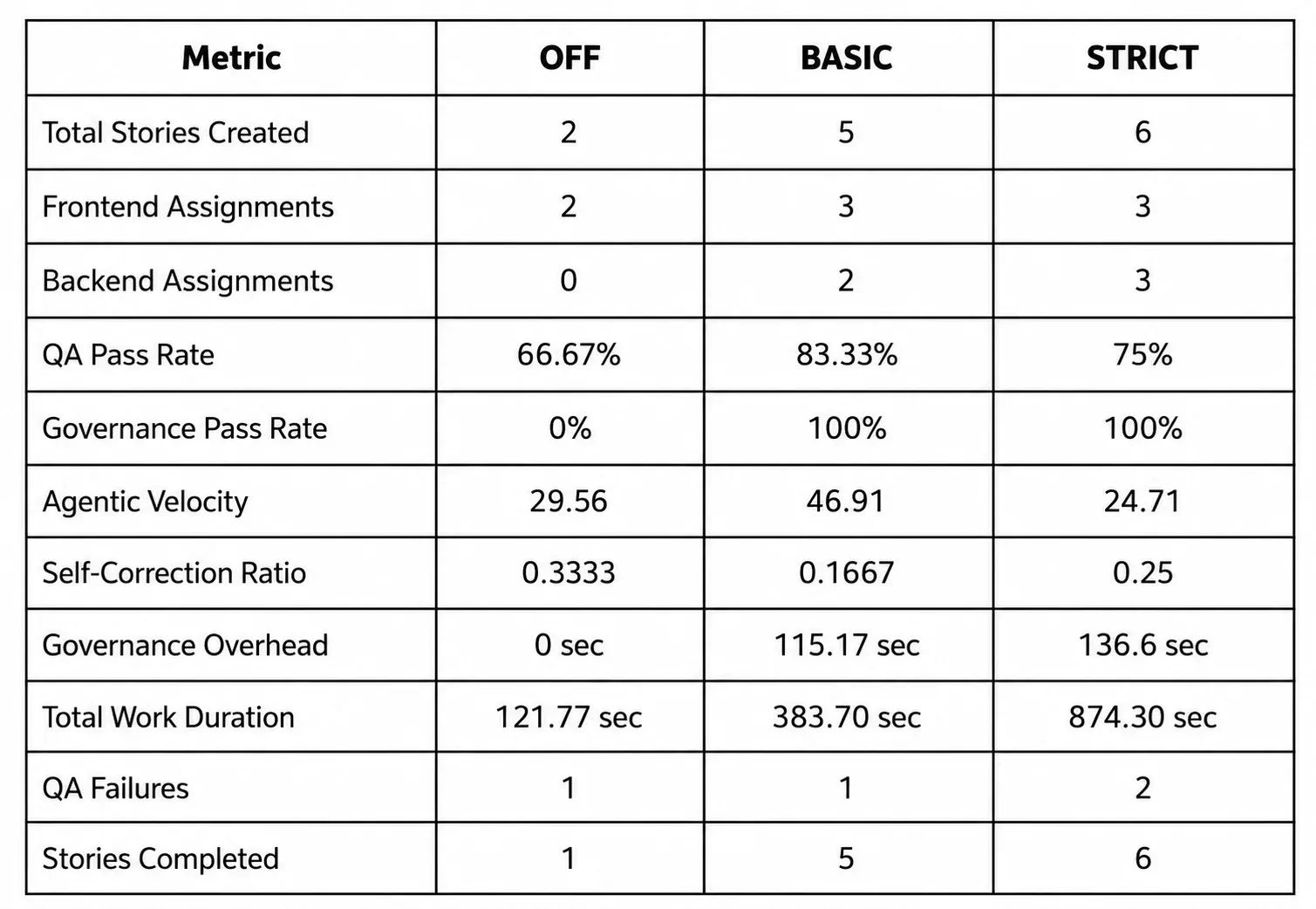
Table 1. Overall Comparison of AI Tool Governance Modes
Table 1. Overall Comparison of AI Tool Governance To place the lab results into context, a case study was conducted using the
software company “Techwaresoft,” established by Syed Sarmad Sabih in the
United Arab Emirates, examining their “Creator Base” project that was developed
using Ruby on Rails (Sabih et al., interview, 2026).
The results from the interviews revealed that the authentication-based user
stories in an enterprise setting take around four to eight hours because of
stakeholder consultation, governance approval, and testing processes (Baloch,
interview, 2026). As shown in Figure 4.0 below, the results from the interviews
showed a QA approval rate of 85% and a governance approval rate of 85%
(Sabih et al., interview, 2026). But governance procedures alone took
approximately one and a half hours for each story. In contrast, the Agentic
Software Development Lifecycle Governance Lab automatically performed six
stories for authentication requirements in 14.57 minutes, whereas the
governance process took only 2.28 minutes with a 100% governance approval
rate.
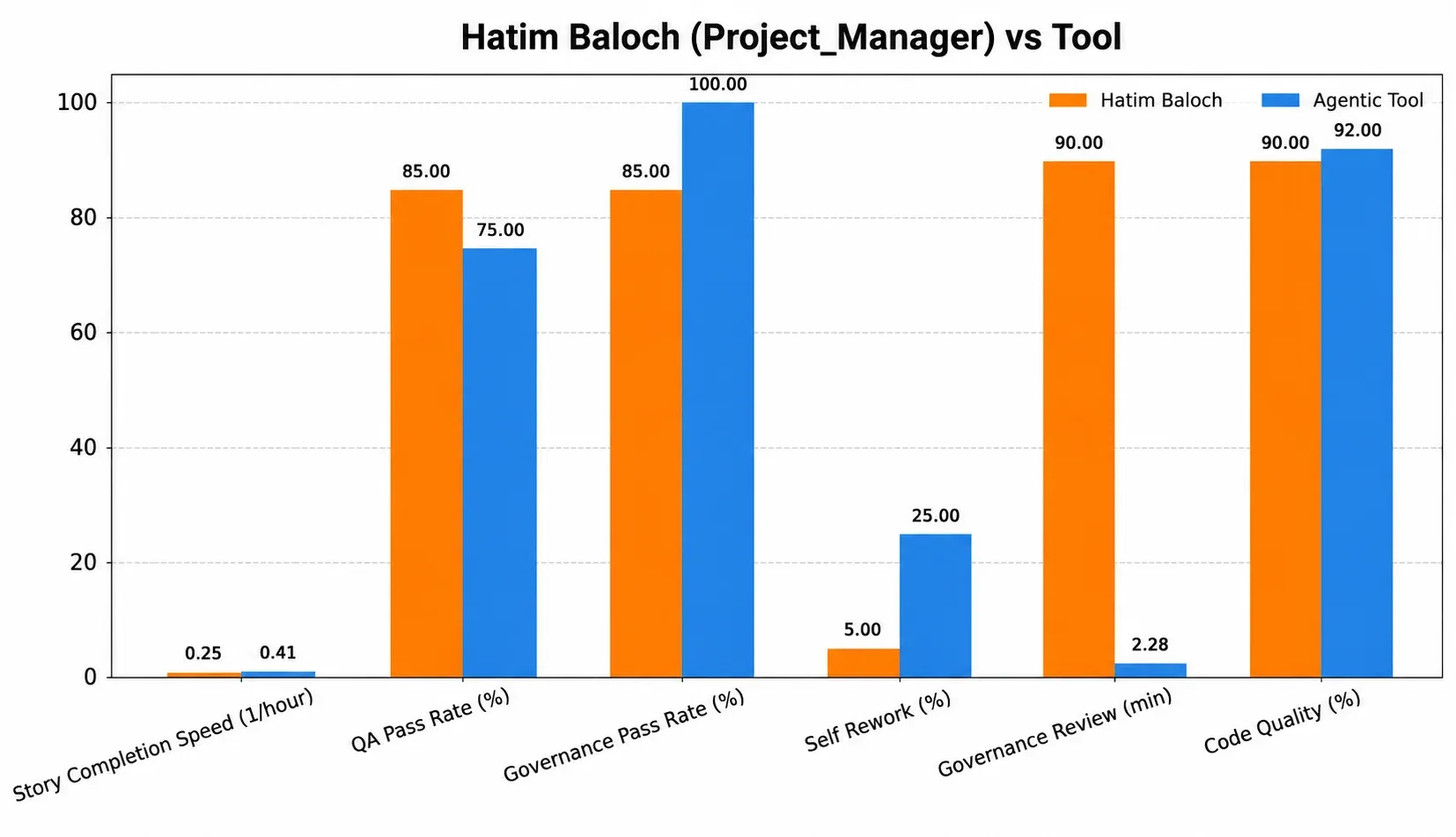
Figure 4.0. Hatim PM of Techwaresoft UAE VS AI Tool
Based on the inputs provided by Umar Hayat, Developer at Techwaresoft UAE,
even the simplest user stories required up to an hour to implement, and the fix
for a single bug was estimated to take around 40 minutes, as shown in Figure
4.1 (Sabih et al., interview, 2026). Moreover, the self-rejection rate was
estimated to be 40%, which implies that the process included multiple cycles of
rejection and correction in enterprise-level software development operations. In
addition, the governance process could require up to 30 minutes per story, with
a governance pass rate of 80% (Sabih et al., interview, 2026). On the other
hand, the suggested Agentic SDLC Governance Lab would facilitate autonomous
recursive correction using the SCR value of 0.25.
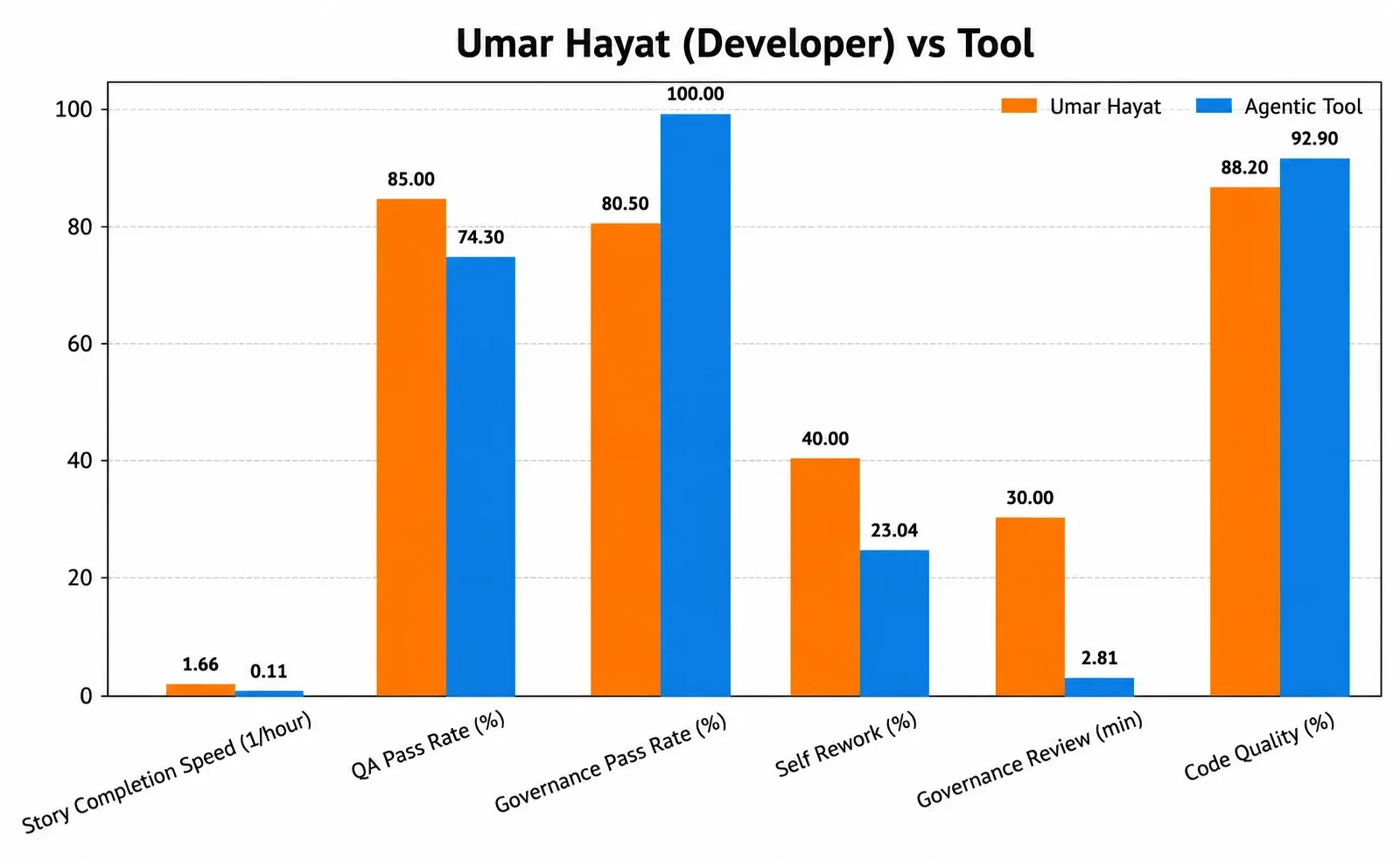
Figure 4.1. Umar Techwaresoft UAE VS AI Tool
Moreover, Mr. Muhammad Mujtaba Khan from Techwaresoft UAE informed that
the QA validation and governance validation processes are still very manual in
enterprise software settings (Sabih et al., interview, 2026). Based on the results
of the interview, it was observed that the authentication test took around four
hours, while governance validation tasks took around 60 minutes. However, even
with a 95% QA validation rate, the governance validation process was still very
manual-based (Sabih et al., interview, 2026). Conversely, the Agentic SDLC
Governance Laboratory automatically performed QA validation and governance
validation tasks using the governance and security agents, respectively, which
involved only 2.28 minutes of governance execution time and achieved a 100%
governance validation rate, as shown in Figure 4.2.
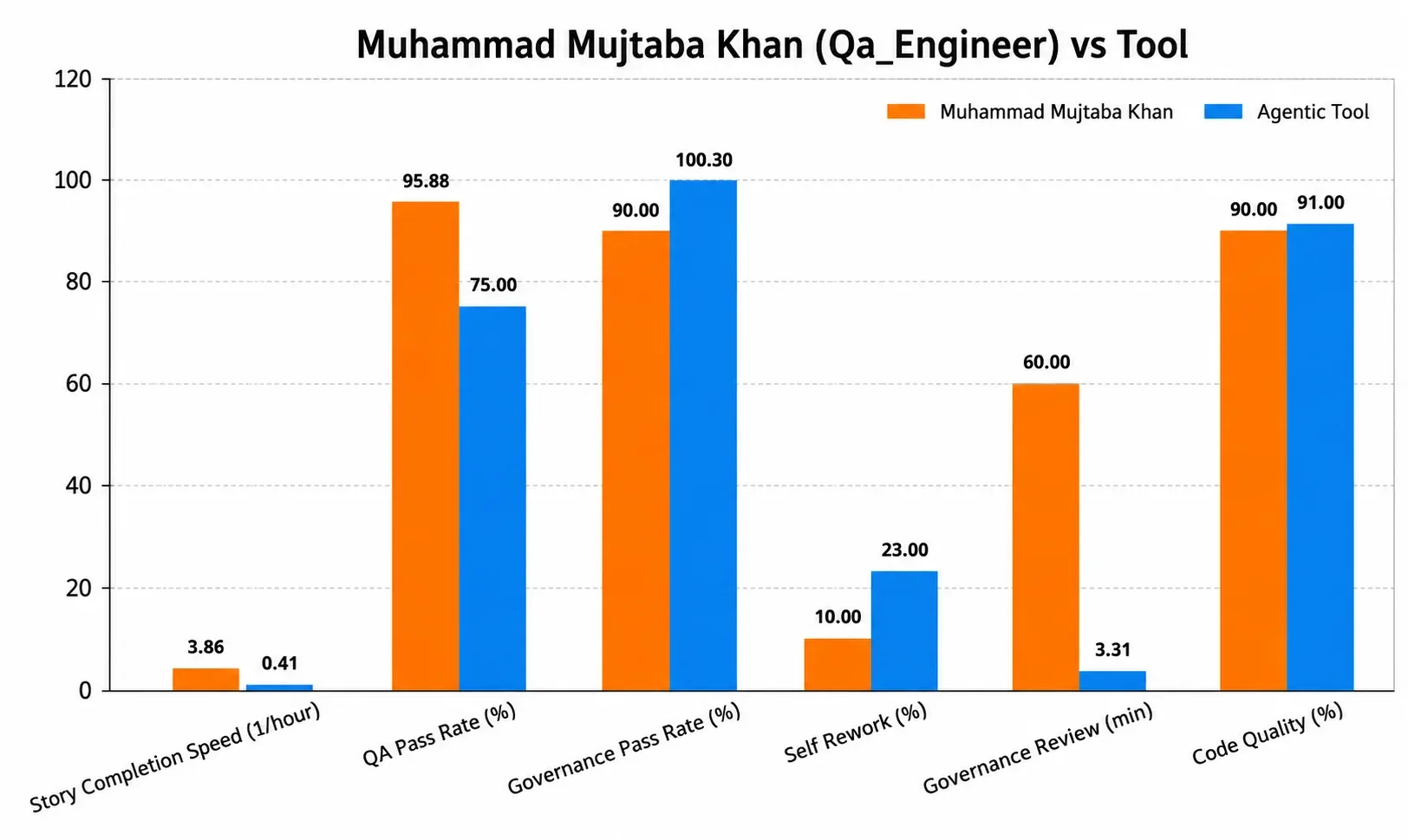
Figure 4.2. Mujtaba Techwaresoft UAE VS AI Tool
These interviews revealed that conventional methods of developing enterprise
software are still very resource intensive, especially when it comes to
governance, stakeholder validation, and iterative changes during the
implementation process (Sabih et al., interview, 2026). In all the interviews
conducted, the results showed that there is considerable involvement of human
effort in quality management, governance assessment, and iterative corrections.
This can be seen in Figure 4.3 below.
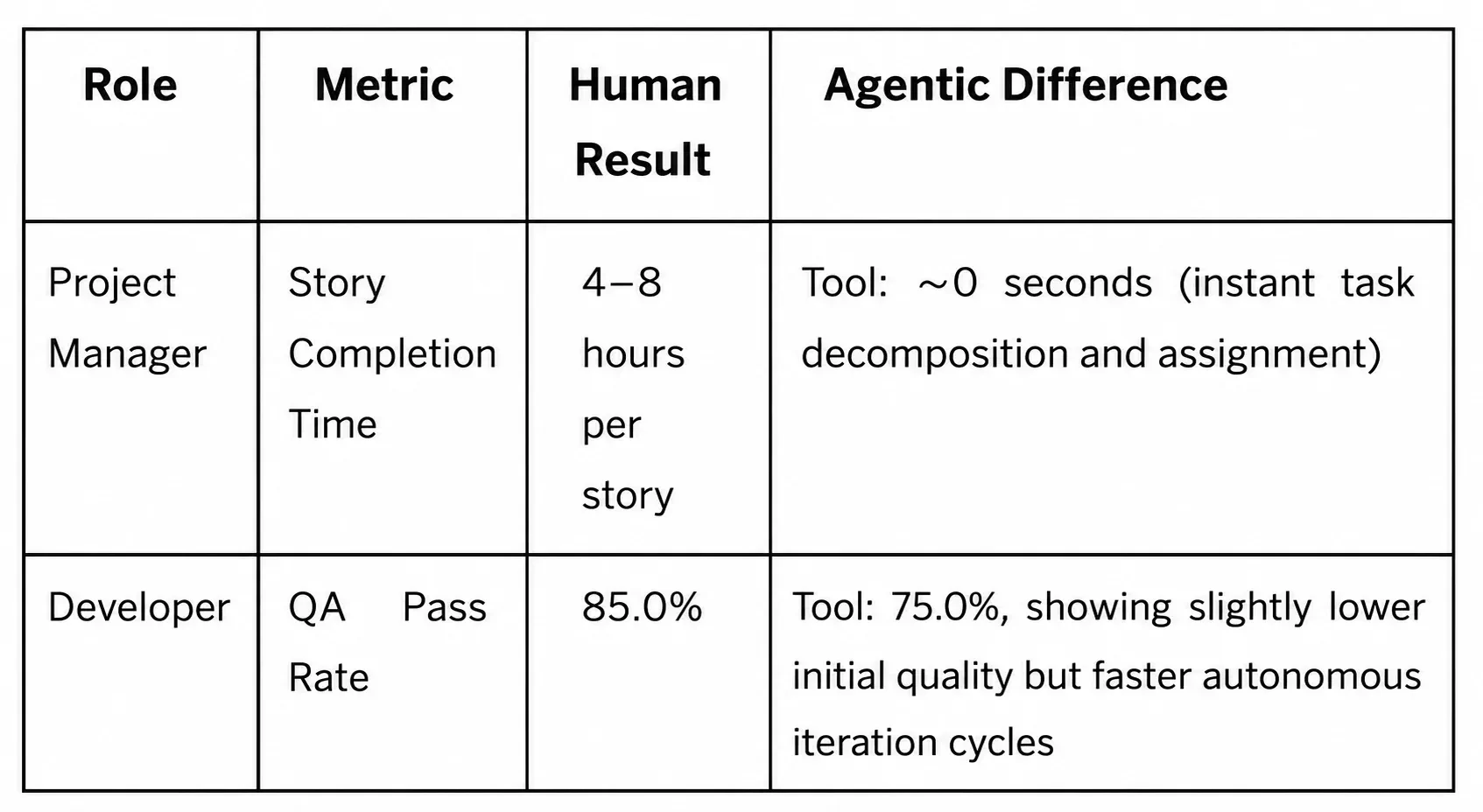
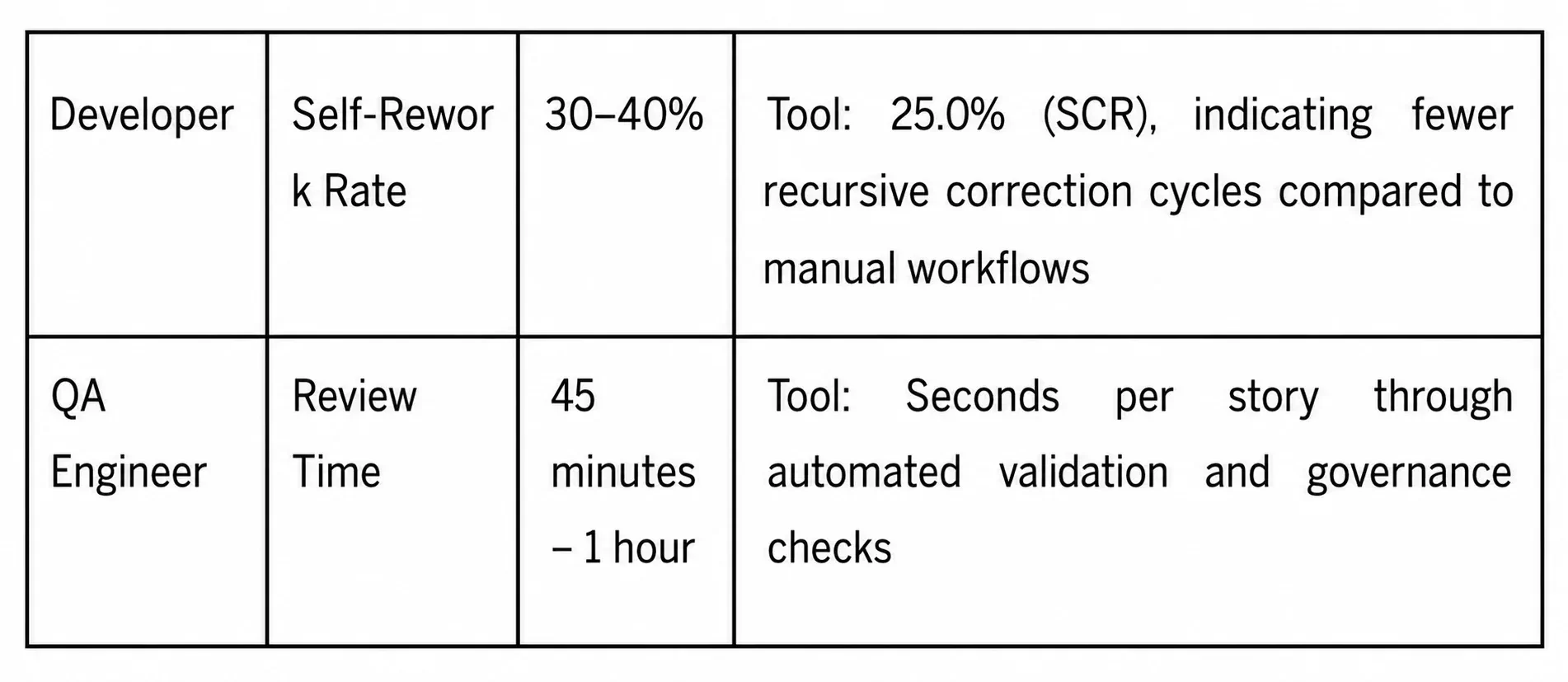
Table 6: Techwaresoft Human Baseline Comparison
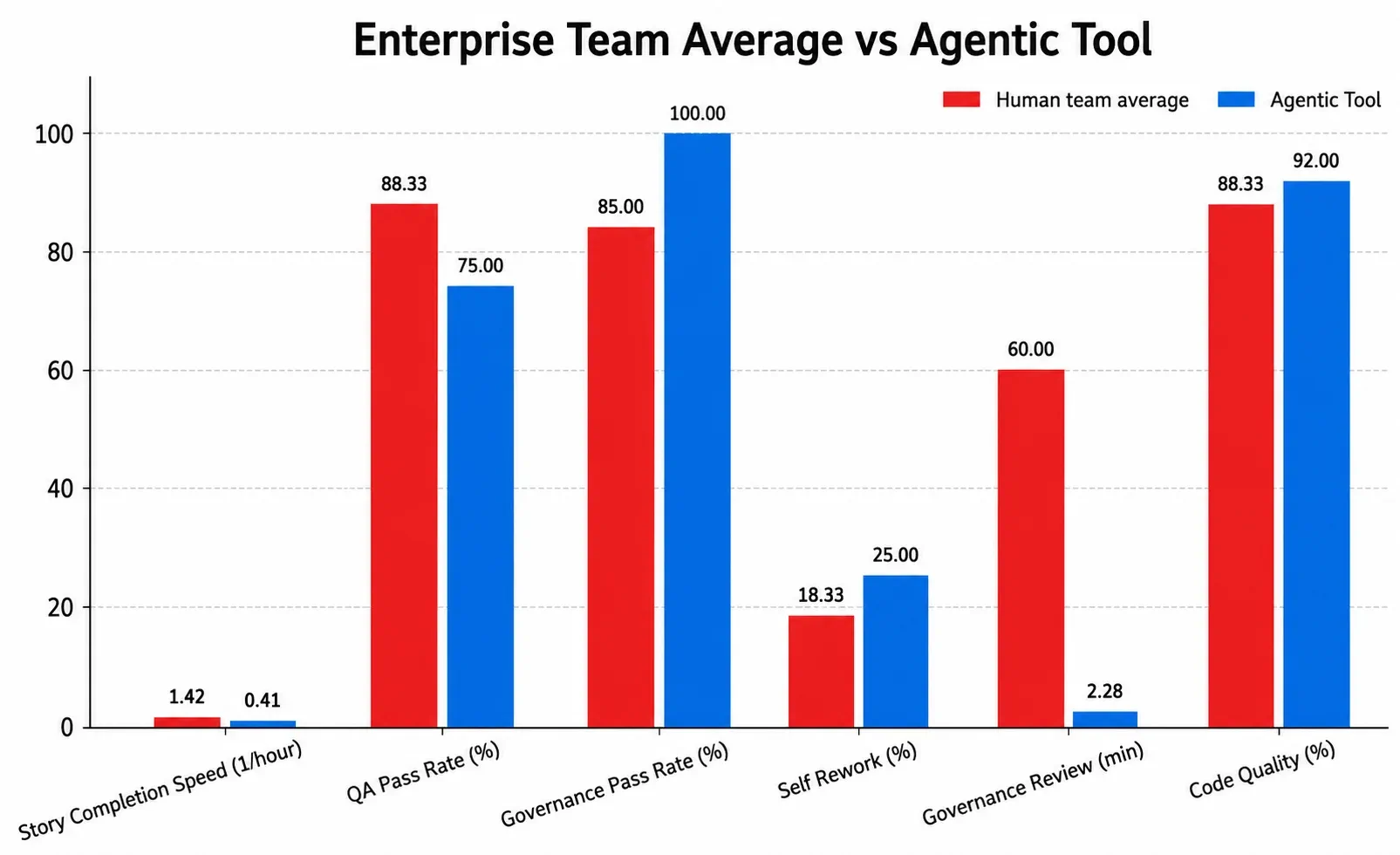
Figure 4.3. Techwaresoft UAE Team Average VS AI Tool
Techwaresoft Project Manager noted that the manual assessment of governance
for an ordinary login page usually takes between 1 to 1.5 hours (Sabih et al.,
interview, 2026). On the other hand, the Agentic SDLC Governance Laboratory
managed to complete the governance cycle for all six user stories in just 2.28
minutes.
Conclusion: The Governance of the Future of Automation
The governed agentic type of artificial intelligence is not just an improvement in
tools but rather a revolution in software project management. The successful
implementation requires the organization’s capacity for shifting from the manual
mode of command and control to that of collective intelligence (Allmendinger et
al., 2026, p. 6).
It becomes possible to gain unrivalled velocity through setting up effective
governance artifacts including operational boundaries and mandatory checkpoint
assertions, thereby keeping the human professional at the helm of the creation
of value and ethical standards (Pysmennyi et al., 2025, p. 53; Akbar et al., 2025,
p. 7).
The findings from the experimental study revealed that STRIGT governance,
which yielded an AV of 24.71 features per hour, was achieved through the
application of the proposed framework with a mere 2.28 minutes overhead to
maintain the 100% governance pass rate. Additionally, it was possible to confirm
the occurrence of autonomous recursion through the calculation of the
self-correction ratio (SCR). The SCR refers to the ratio of QA tasks that were
automatically corrected and re-submitted.
References
Awais, M. (2026). Governing Agentic AI in the Software Development Life
Cycle: a Project Management Framework for Control and Quality
Assurance. https://urn.fi/URN:NBN:fi:amk-2026051110956
Sabih, S. S., Hatim, Umar, & Mujtaba. (2026, May 6). TechwareSoft UAE:
AI-driven SDLC research and industry validation interview [Video].
YouTube. https://youtu.be/ZoJ3dSXWkCw?si=GXOsA0RZ6T9JlT0f
Akbar, M. A., Khan, A. A., Hamza, M., Ghaffar, A., & Hajikhani, A. (2025).
Agentic AI in software engineering: Practitioner perspectives across the
software development life cycle. https://dx.doi.org/10.2139/ssrn.5520159
Gill, A. Q. (2025). Agile system development lifecycle for AI systems:
Decision architecture. arXiv preprint arXiv:2501.09434.
https://doi.org/10.48550/arXiv.2501.09434
Hu, S., Lu, C., & Clune, J. (2024). Automated design of agentic systems.
arXiv preprint arXiv:2408.08435.
https://doi.org/10.48550/arXiv.2408.08435
Mustafa, A. (2025). How Agentic AI is transforming workflow automation
in 2025.
Parikh, N. A. (2026). Agentic AI in product management: A
co-evolutionary model. In High Performance Leadership for Organizational
Excellence (pp. 1–36). IGI Global.
https://doi.org/10.48550/arXiv.2507.01069
Pysmennyi, I., Kyslyi, R., & Kleshch, K. (2025). AI-driven tools in modern
software quality assurance. arXiv preprint arXiv:2506.16586.
https://doi.org/10.48550/arXiv.2506.16586
Ståhlberg, V. (2024). Enhancing software development processes with
artificial intelligence. https://urn.fi/URN:NBN:fi-fe2024103087998


Working on something like this?
Tell us what you are building and who it is for. We will tell you what it takes.